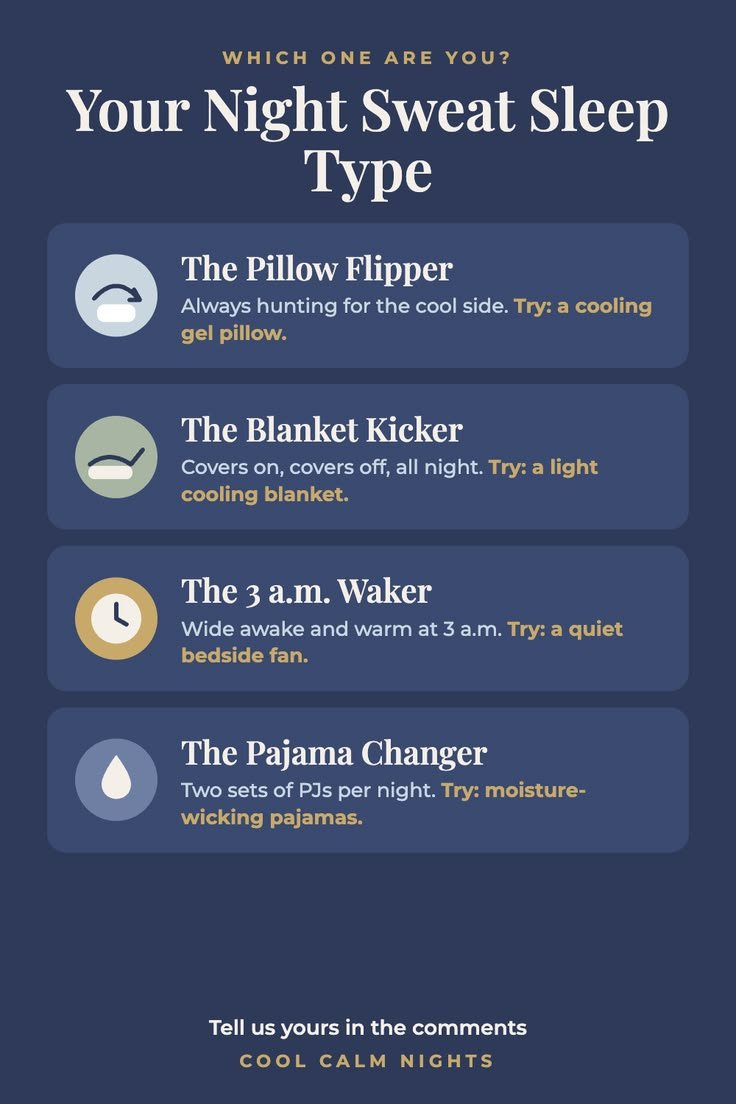
Not every hot night looks the same. Some of us flip the pillow all night long, some kick off every blanket, and some wake up drenched at 3 a.m. Knowing your night sweat sleep type can help you find the fix that actually works for you.

The Pillow Flipper
You’re always hunting for the cool side of the pillow. Your head and neck feel hot first.
Your fix: Try a cooling pillow or a breathable pillowcase in cotton percale, bamboo, or silk. Keep a second pillow nearby so you can swap to a cool one instead of flipping.
The Blanket Kicker
One minute you’re cozy, the next you’re kicking everything off, then you’re cold again.
Your fix: Ditch the one heavy comforter and layer instead. Use a light sheet plus a thin blanket you can pull on and off without fully waking up. A breathable duvet in linen or cotton helps too.
The 3 A.M. Waker
You fall asleep fine, then wake up hot and wide awake in the middle of the night.
Your fix: Keep your bedroom cool, around 65 to 68°F, and keep a glass of ice water on your nightstand. When you wake, sip, cool down, and try a few rounds of slow 4-7-8 breathing instead of checking your phone.
The Pajama Changer
You wake up so damp you have to change clothes before you can fall back asleep.
Your fix: Swap cotton pajamas for moisture-wicking sleepwear that dries fast. Keep a spare set and a small towel by the bed so a quick change doesn’t wake you up completely.
Fixes that help every type
- Cool the room before bed. Close the blinds during the day and run a fan an hour before bedtime.
- Skip late alcohol and spicy food. Both can trigger night sweats for many women.
- Take a lukewarm shower instead of a hot one before bed.
- Keep a small fan by the bed for instant relief.
When to talk to your doctor
If night sweats are soaking you night after night, wrecking your sleep, or come with fever or weight loss, talk to your doctor. There are effective treatments, and frequent night sweats are worth checking out.
A simple bedroom checklist for every type
No matter your night sweat type, a few changes to your bedroom help almost everyone:
- Set the thermostat low. Many sleep experts suggest a bedroom temperature in the mid-60s Fahrenheit.
- Choose breathable sheets like cotton percale, linen, bamboo viscose or lyocell.
- Layer your bedding with a light sheet and a separate blanket you can kick off.
- Keep a fan nearby and point it toward your face or upper body.
- Have a change of clothes ready by the bed, along with a glass of cool water.
Habits that can make night sweats worse
Some everyday habits can trigger or worsen night sweats. Notice whether any of these show up on your worst nights:
- Alcohol, especially in the evening
- Spicy food or large meals close to bedtime
- Hot drinks before bed
- Stress or a racing mind at bedtime
- A warm shower right before you lie down
Keeping a simple sleep diary for two weeks can help you spot your personal triggers.
Common questions
Can my night sweat type change over time?
Yes. Many women move between types as their hormones shift, the seasons change, or their routines change. Check in with yourself every few months.
Do cooling mattress toppers help?
Many women find them helpful, especially gel-infused or breathable latex toppers. They’re a good option if your mattress holds heat.
Are night sweats always caused by menopause?
Not always. Infections, certain medications, thyroid problems and other conditions can cause them too. If night sweats are severe or come with fever or weight loss, see your doctor.
The takeaway
Which type are you? Once you know your night sweat sleep type, a few simple changes can help you sleep cooler and wake up less. Save the pin, tell us your type in the comments, and follow along on Pinterest for more real-life menopause tips.
This article is for general information only and isn’t medical advice.