High-intensity interval training (HIIT) sounds intimidating. Burpees, jump squats, and sore knees? No thanks. The good news is that you can get many of the same benefits with a low-impact version: no jumping, easy on the joints, and done in just 15 minutes.

Why low-impact HIIT works in midlife
HIIT simply means short bursts of harder effort followed by short rests. It raises your heart rate, builds stamina, and fits into a busy day. The low-impact version keeps one foot on the floor, so it’s kinder to your knees, hips and pelvic floor, which matters more after 40 and 50.
The 15-minute workout
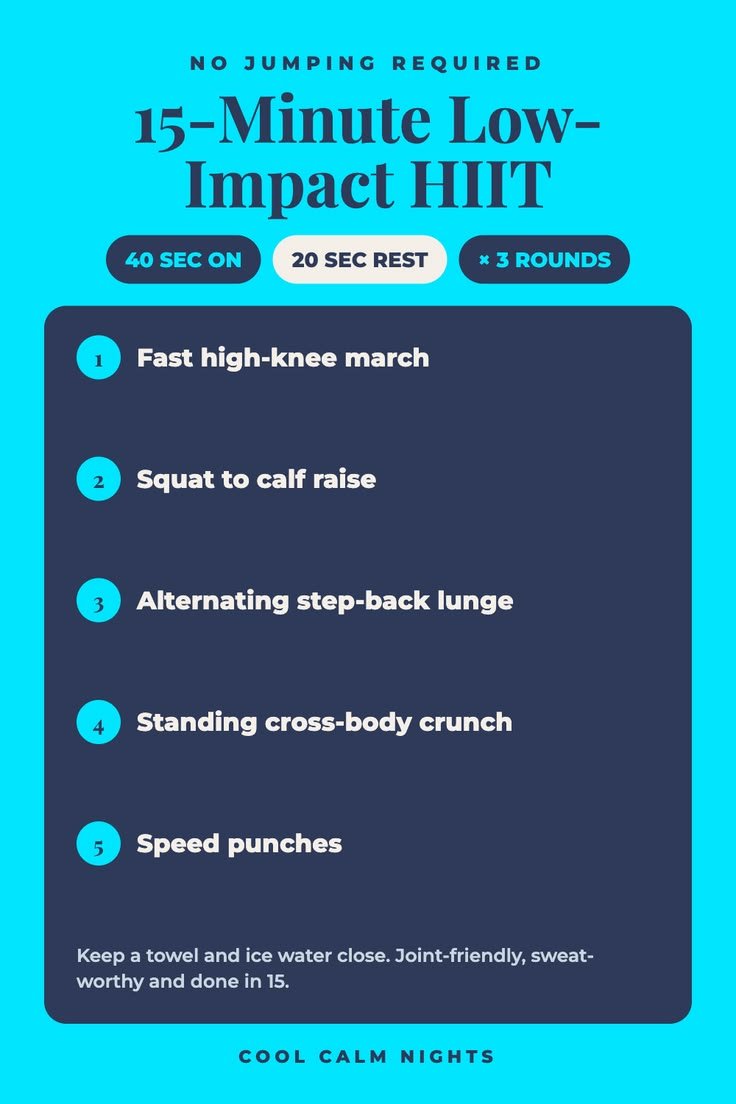
Do each move for 40 seconds, then rest for 20 seconds. Go through all five moves, rest for one minute, then repeat for three rounds total.
- High-knee march. March in place, lifting your knees as high as feels comfortable and pumping your arms.
- Squat to calf raise. Sit back into a squat, stand up tall, and rise onto your toes at the top.
- Step-back lunges. Step one foot back, bend both knees, then return and switch sides. Hold a chair for balance if you need it.
- Standing crunches. Hands behind your head, lift one knee toward the opposite elbow, then switch.
- Speed punches. Stand with soft knees and punch forward quickly, alternating arms. Keep your core tight.
Tips to get the most out of it
- Warm up first. March gently and roll your shoulders for 2 to 3 minutes.
- Work at your own pace. “Hard” means breathing harder but still able to say a few words.
- Keep good form. Slow down before you get sloppy.
- Cool down and stretch for a few minutes afterward.
- Pair it with strength training. HIIT boosts your heart and stamina, while lifting weights two to three times a week protects your muscles and bones.
- Stay cool. Exercise can trigger a hot flash, so keep a fan and cold water nearby and wear breathable layers.
How often?
Two or three times a week is a great start. On other days, go for a walk, stretch, or do a strength workout.
Warm up and cool down
A good warm-up gets your blood flowing and makes the workout feel easier. Spend three to five minutes before you start:
- March in place, swinging your arms
- Roll your shoulders forward and back
- Do slow bodyweight squats to a chair
- Gently circle your hips and ankles
After the workout, take another few minutes to slow down. Walk around the room, then stretch your calves, thighs, hips and chest. Hold each stretch for about 20 to 30 seconds and breathe slowly.
Make it easier or harder
Low-impact HIIT is easy to adjust:
- To make it easier: shorten each work interval to 20 seconds, take longer rests, or hold onto a chair for balance.
- To make it harder: add light dumbbells to squats and step-backs, speed up your pace, or repeat the full circuit one more time.
Use the “talk test.” During the work intervals, you should be breathing hard but still able to say a few words. If you can’t, slow down.
Common questions
Is HIIT safe if I have joint pain?
Low-impact versions are designed to be gentler on knees and hips, since there’s no jumping. Move within a comfortable range and skip any exercise that causes sharp pain. Check with your doctor if you have arthritis, an injury or a heart condition.
Can I do this on the same days as strength training?
Yes. Many women do a short HIIT session after strength work, or on alternate days. Just make sure you get at least one or two rest days each week.
When will I notice a difference?
Many women feel more energetic within two to three weeks of regular workouts. Changes in strength and stamina usually build over one to three months.
The takeaway
You don’t need to jump to get fit after 50. This 15-minute low-impact HIIT workout raises your heart rate, builds strength, and goes easy on your joints. Save the pin for your next workout, and follow along on Pinterest for more real-life menopause tips.
This article is for general information only and isn’t medical advice. Check with your doctor before starting a new exercise routine.