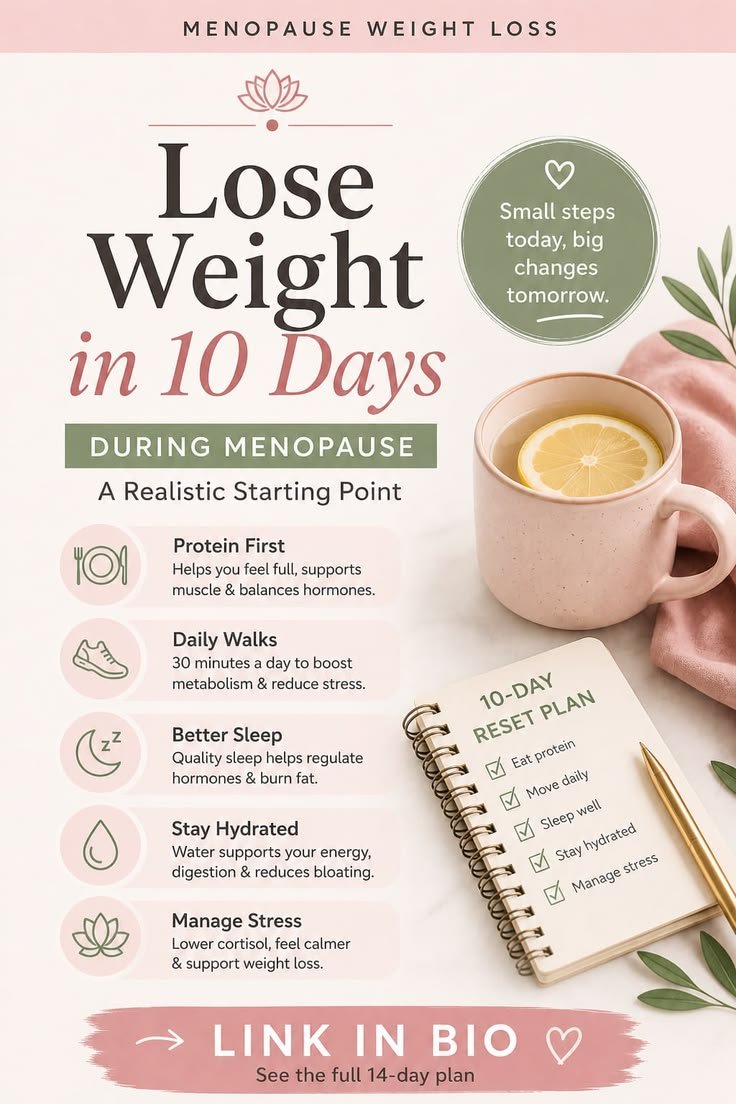
If you’re eating the same way you always have but your jeans fit differently, you’re not imagining it. Many women notice changes in weight and body shape during perimenopause and menopause, especially around the middle. Crash diets usually backfire. What works better is a simple, realistic start built on a few basics.

What’s changing
As estrogen drops, many women lose muscle more easily and store more fat around the belly. Less muscle means your body burns a little less energy at rest. Poor sleep and stress can make cravings and weight gain even harder to manage. The answer isn’t eating as little as possible. It’s protecting your muscle and supporting your body.
Step 1: Add protein to every meal
Protein helps you keep and build muscle, and it keeps you full longer.
- Breakfast: Greek yogurt, eggs, or cottage cheese
- Lunch: chicken, tuna, beans or tofu on a big salad
- Dinner: fish, lean meat or lentils with vegetables
- Snacks: a handful of nuts, a cheese stick or edamame
Many experts suggest aiming for about 25 to 30 grams of protein at each meal. Ask your doctor or a dietitian what’s right for you.
Step 2: Walk every day
Walking is one of the easiest ways to stay active. Start with 10 to 15 minutes after a meal and build up over time. General health guidelines recommend at least 150 minutes of moderate activity a week, which is about 30 minutes, five days a week.
Step 3: Add a little strength training
Walking is great, but strength training is what protects your muscles. Two short sessions a week with resistance bands or light weights, like squats, wall push-ups and rows, make a real difference over time.
Step 4: Protect your sleep
When you sleep poorly, your hunger hormones go up, and your willpower goes down. Keep your bedroom cool, stick to a regular bedtime, and limit late-night screens.
Be patient with yourself
Real change takes weeks and months, not days. Focus on habits you can keep: more protein, more movement, better sleep. Those small steps add up.
A simple day of eating that supports your metabolism
You don’t need a strict diet. A simple pattern built around protein, fiber and plenty of water is a strong place to start:
- Breakfast: eggs with vegetables, or Greek yogurt with berries and nuts
- Lunch: a big salad or bowl with chicken, fish, beans or tofu
- Snack: cottage cheese, a hard-boiled egg or a protein smoothie
- Dinner: a palm-sized portion of protein, a generous serving of vegetables and a small portion of whole grains or potatoes
Aim to include protein at every meal. It helps you feel full and supports the muscle you’re working to keep.
Track progress beyond the scale
The scale doesn’t tell the whole story, especially when you’re building muscle. Other signs of progress are just as important:
- Your clothes fit more comfortably
- You can walk farther or faster
- You can lift heavier weights
- You have more energy in the afternoon
- You’re sleeping more soundly
Taking a monthly photo or waist measurement can also show changes the scale misses.
Common questions
Do I need to count calories?
Not necessarily. Many women do well by focusing on protein, vegetables and portion awareness first. If you want more structure, a registered dietitian can help you create a plan that fits your life.
What about supplements?
Some women need vitamin D, calcium or other supplements, but needs differ from person to person. Ask your doctor about a blood test before adding new supplements.
How long until I see results?
Give new habits at least 8 to 12 weeks. Progress in midlife is often slower, but it is steady when you stick with it.
The takeaway
Your metabolism may change in menopause, but you still have a lot of power. Protein at every meal, a daily walk, two strength sessions a week, and good sleep are a realistic place to start. Save the pin, and follow along on Pinterest for more real-life menopause tips.
This article is for general information only and isn’t medical advice. Talk with your doctor before making big changes to your diet or exercise.